How to Make a Business Email: Step-by-Step Guide

Strong business emails don't fail because the writer can't type. They fail because the message buries the ask, matches the wrong tone, or lands in spam. If you've ever stared at a blank draft wondering how to make a business email that actually gets a reply, the fix isn't a fancier template.
It's matching structure to the situation.
Subject line length matters more than most people think. Research on email engagement points to roughly 6 to 10 words (under about 50 characters) as the sweet spot for opens. Per the FTC's CAN-SPAM guidance, accurate headers and a working opt-out are also baseline requirements, not optional extras.
Get the foundations right, and every email after that gets easier.
how to make a business email
Write a clear subject line. Open with context or your ask. Keep the body short.
Add one specific call to action. Close with a sign-off and signature. Proofread the recipient's name, links, and attachments.
Then send and follow up.
That's the whole process in six moves. Everything below is about which branch of that process you take.
Start With the Goal, Not the Greeting
Decide what you want the reader to do before you write a single word. That's the first move in any business email, and it shapes everything else. If you can't name the outcome in one sentence, the email isn't ready to write.
Here's the if/then logic that runs underneath the whole thing:
- If you want a decision, lead with the question.
- If you want information, lead with why you need it.
- If you want someone to do a task, lead with the deadline.
- If you're just keeping a record, keep it short and skip the small talk.
Writers who start with the greeting get stuck. Writers who start with the goal usually finish the draft in five minutes.

Image source: Web (Bing) / virtualworkforce.ai (Web image (fair-use with source credit))
The Five Parts Every Business Email Needs
Every business email, regardless of type, has the same five components. Get these right and you can adapt them to almost any situation.
| Part | Purpose | Quick rule |
|---|---|---|
| Subject line | Tells the reader why to open | Under 50 characters, specific |
| Greeting | Sets the tone | Match the relationship, first name is usually fine |
| Opening | Gives context or the ask | Lead with the point, not the weather |
| Body | Details, links, attachments | Short paragraphs, one idea each |
| Close | Sign-off, signature, next step | One clear call to action |
The greeting is where a lot of people overthink things. "Dear Mr. Smith" reads stiff in most modern business settings.
"Hi Sarah" reads normal. Match the relationship, not the stereotype of what business writing should sound like.
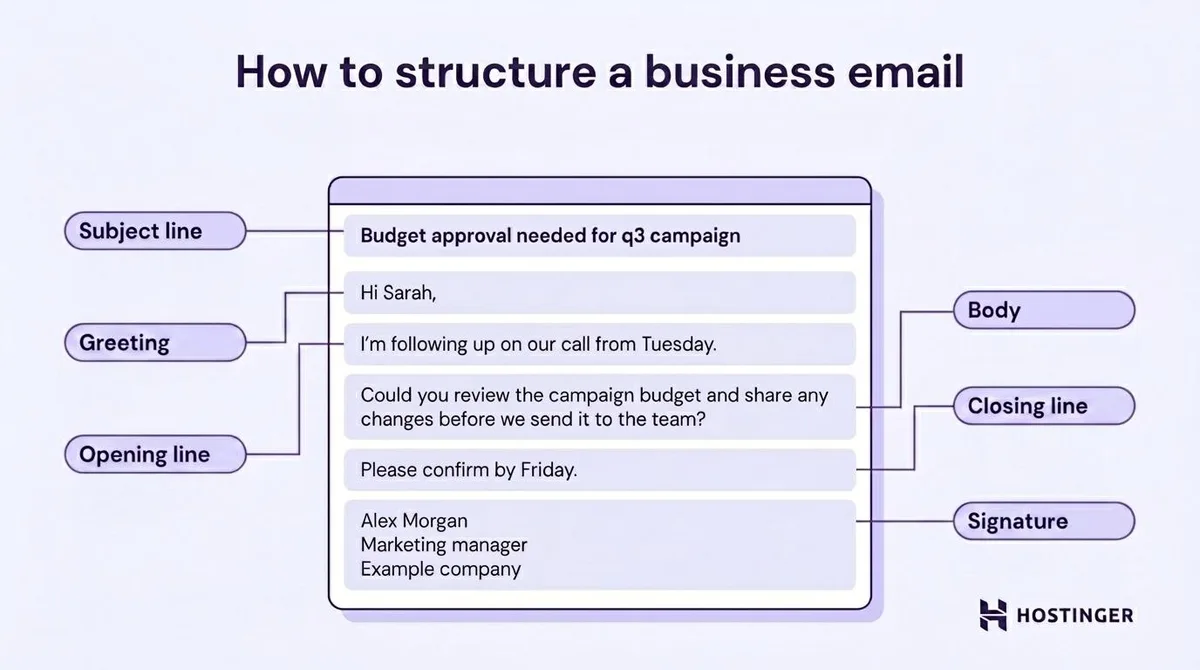
Image source: Bing (Web (fair-use with source credit))
Pick Your Branch: What Kind of Email Are You Writing?
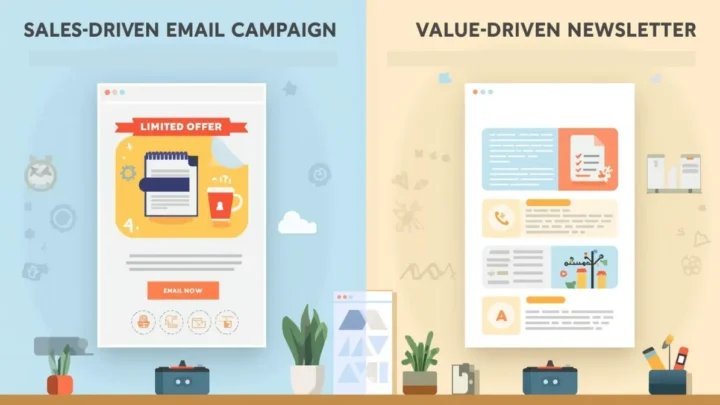
The structure stays the same across every email type. What changes is the emphasis. A cold email lives or dies on its opening line.
A follow-up lives on its brevity. You can't write all four types the same way and expect the same result.
Cold Outreach to Someone Who Doesn't Know You
Keep it under 125 words. Your first sentence has to earn the second one. Name why you're reaching out and what's in it for them, then stop.
Don't stack three questions. Ask for one thing, and make it a low-commitment ask like a 15-minute call. Cold emails that read like newsletters get deleted.
Cold emails that read like one human writing to another get replies.
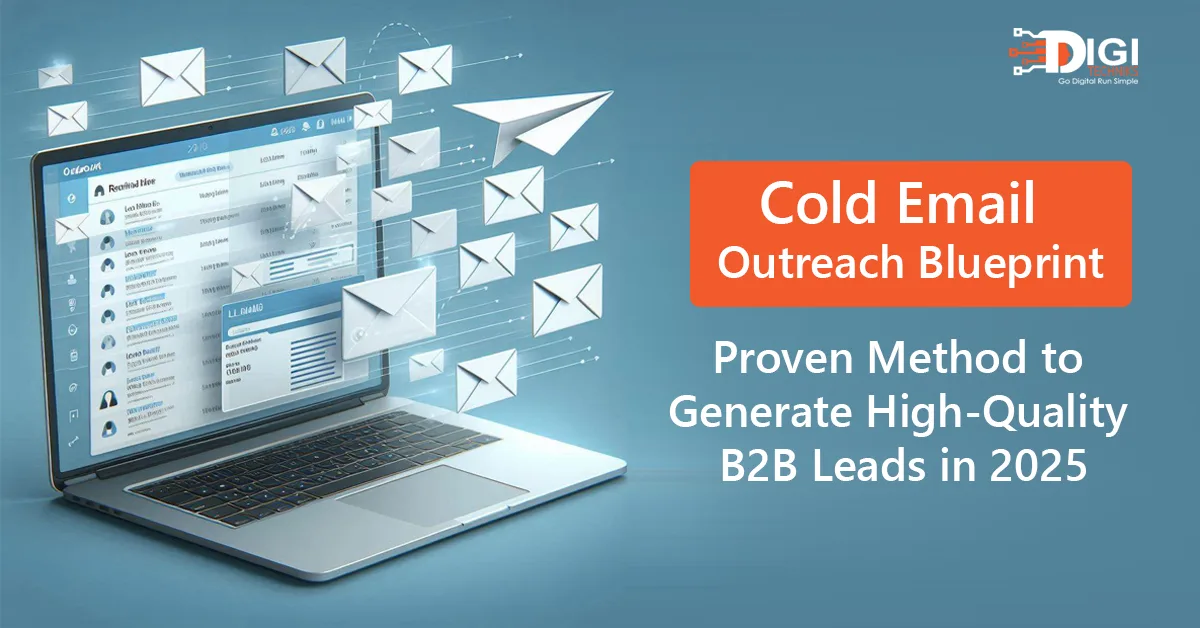
Image source: Bing (Web (fair-use with source credit))
Follow-Up When They've Gone Quiet
Wait 2 to 3 business days, then send a short nudge. Don't re-explain the whole original message. Reference it in one line and ask again.
Aggregate sales research shows follow-ups lift response rates significantly versus a single send, often by 2x or more. Two to three follow-ups is the practical ceiling before it feels like pressure.
Internal Ask to a Teammate or Your Boss
Skip the formality. Your boss doesn't need "I hope this email finds you well." Lead with the ask, add the context underneath, and give a deadline if there is one.
If the thread passes four or five replies, switch to a call or a chat. Email threads that never close waste everyone's afternoon.
External Client, Vendor, or Partner Message
Slightly more formal than internal, but still human. Confirm what you need, when you need it, and any dependencies on their side.
CC only the people who need to see it. Reply-all abuse is one of the fastest ways to look like you don't understand email etiquette.
Subject Lines, Tone, and Formatting That Fit the Reader
The subject line does 80% of the work. If it's vague, the reader never sees the body. If it's clear, the body almost reads itself.
A good subject line:
- Names the topic, not the emotion ("Q3 budget review" beats "Quick question")
- Is under 50 characters
- Avoids ALL CAPS and multiple exclamation marks
- Changes when the topic changes on a thread
Tone should match the reader, not your mood. If you're writing to a German counterpart, expect slightly more formal openings. If you're writing to a Dutch or Nordic colleague, expect directness to be welcomed.
Formatting matters more than most people realize, because a large share of business emails get read on a phone. Keep paragraphs to two or three sentences. Use bullets for lists.
Skip colored fonts and elaborate HTML signatures.
One ask per email. If you have three questions that each need an answer, that's three emails or a call.
Mistakes That Get You Ignored (or Land You in Spam)
Most email problems trace back to a handful of recurring errors. None of them are exotic.
- Vague subject lines that give the reader no reason to open
- Burying the ask in paragraph three
- Stuffing five questions into one message
- Robotic openers ("I hope this email finds you well")
- Wrong names, wrong companies, wrong titles
- Missing attachments or broken links
- Reply-all on threads with 12 people on them
- Emails that should've been a Slack message
Two of these are worse than the rest. A wrong name reads as carelessness. A missing attachment reads as unprepared.
Both cost you credibility instantly.
On the compliance side, US commercial email has to follow the CAN-SPAM Act. That means accurate headers, a clear opt-out, and a physical address in the footer. If you're emailing into the EU or UK, GDPR and PECR add consent and lawful-basis rules on top.
These apply whether you're sending one email or a thousand.
Business Email FAQs
How long should a business email be?
Keep it under 150 words for most messages, and under 125 for cold outreach. Busy readers skim on phones, so shorter wins. If the email runs past 200 words, you probably need a call or a document instead.
When should I use CC vs. BCC?
CC the people who need visibility on the conversation. BCC for large lists where you don't want reply-all chaos. Never use BCC to secretly loop in someone on a thread, that erodes trust fast.
How soon should I follow up?
Give it 2 to 3 business days for external contacts. Wait 24 hours for internal colleagues. If you're on a deadline, say so in the original email so the follow-up doesn't feel like pressure.
Do I need a formal greeting in every business email?
No. Match the greeting to the relationship. "Hi Sarah" works for most colleagues and clients.
Save "Dear Mr./Ms." for legal, government, or first-contact situations where formality is expected.
Is there a legal requirement for business emails?
Yes, in the US. The CAN-SPAM Act requires accurate headers, a working unsubscribe, and a physical address in commercial email. GDPR and PECR add consent rules if you're emailing into the EU or UK.
Quick Decision Guide: Match the Email to the Situation
Pick the branch by matching your situation to the row below. That's the whole decision tree in one table.
| Situation | Lead with | Length | Follow-up |
|---|---|---|---|
| Cold outreach | Their problem + one ask | Under 125 words | 2 to 3 days |
| Follow-up | Reference + re-ask | Under 80 words | 2 to 3 days |
| Internal ask | The task + deadline | Under 100 words | 24 hours |
| Client/vendor | What you need + when | Under 150 words | 2 to 3 days |
| Escalation | Facts + requested action | Under 150 words | Same day |
If the topic needs more than five back-and-forth replies, switch to Slack, Teams, or a call. Email is a poor fit for real-time decisions.
Image source: Bing (Web (fair-use with source credit))
One final rule that ties everything together: write the email you'd want to receive. Short, clear, one ask, no wasted words. Do that consistently and your reply rate takes care of itself.
Frequently Asked Questions
How do I start a business email?
Start with the recipient's name and one line of context. Then state your ask in the next sentence. Skip the small talk and get to the point, because busy readers decide whether to keep going in the first five seconds.
What's the best subject line for a business email?
Name the specific topic and keep it under 50 characters. "Invoice #4821 needs approval" beats "Quick question." Skip ALL CAPS, emojis, and multiple exclamation marks, since those trip spam filters and read as unprofessional.
How do I write a cold business email that gets replies?
Keep it under 125 words, name one problem you can solve, and ask for one low-commitment action. Personalize the first sentence so it doesn't read like a template. Follow up twice if you don't hear back, then let it go.
Should I use a formal or casual tone?
Match the reader, not the stereotype. Most modern workplaces are fine with "Hi Sarah" and contractions. Save "Dear Mr./Ms." for legal, government, or very senior first-contact emails.
When in doubt, warmer beats stiffer.
How do I follow up without sounding pushy?
Reference the original email in one line, then re-ask. Don't re-explain everything. Give a clear reason for the follow-up, like an upcoming deadline.
Two to three nudges is the practical ceiling before it starts to feel like pressure.
Can I send the same business email to multiple people?
Only if it's genuinely identical and nobody needs to reply privately. Use BCC for large lists to avoid reply-all chaos. If the message needs personalization, send individual emails instead.
Mass blasts that read like templates hurt your reputation and your deliverability.

Similar Posts