Why Klaviyo Beats Mailchimp for Ecommerce
Shopping cart abandonment recovery alone often drives 30% to 40% of an ecommerce store’s total email revenue. So why is Klaviyo better than Mailchimp for so many DTC brands? Because Klaviyo was built around store data from day one, while Mailchimp grew up as a general newsletter tool.
That difference shows up in the numbers. As of 2026, Klaviyo’s free plan covers up to 250 contacts, compared with Mailchimp’s 500, but Klaviyo syncs product catalog and order events in real time through the Shopify integration. Here’s how the two platforms actually compare once you look past the marketing pages.
Quick Answer
Klaviyo is better than Mailchimp for ecommerce stores that depend on behavioral data. It syncs product views, carts, and orders in real time. Segmentation and predictive analytics run on that live data.
Native SMS shares the same customer profiles. Mailchimp suits simpler newsletters better.
Why This Comparison Actually Matters (and Where It Goes Wrong)
The real question isn’t which platform is “better” in the abstract. It’s which one fits your store, your list size, and how you actually make money from email.
Most comparison articles hand you a feature checklist and call it a day. That’s lazy. Klaviyo and Mailchimp both send email, both offer automation, and both have free tiers.
On a bullet list, they look nearly identical.
The differences live in the details. Behavioral triggers, pricing curves, SMS availability, and how deep the Shopify integration really goes. Those are what decide whether your abandoned cart flow earns 15% or 40% of your email revenue.
So the honest answer depends on you. In our analysis of both platforms’ documentation and merchant feedback, three variables keep deciding the outcome:
- What you sell. Physical products with a checkout flow? Klaviyo’s edge is huge. Services and newsletters? Mailchimp is fine.
- How big your list is. Below 1,000 contacts, the gap barely matters. Above 10,000, it becomes a real cost and capability question.
- Whether SMS matters. If you want email and SMS in one system, Klaviyo is native. Mailchimp’s SMS is limited by region and feature set.
If you sell products online and want email to actually drive revenue, keep reading. If you run a blog or service business, you can probably stop here and save yourself the migration headache.
What Klaviyo Does Differently: The Core Mechanics
Klaviyo is a customer data platform and marketing platform in one. It stores every profile with its events, then lets you act on that data in email and SMS.
Mailchimp treats contacts more like list members. Klaviyo treats them like a running record of behavior. That’s the whole ballgame.
Real-Time Ecommerce Data and Behavioral Tracking
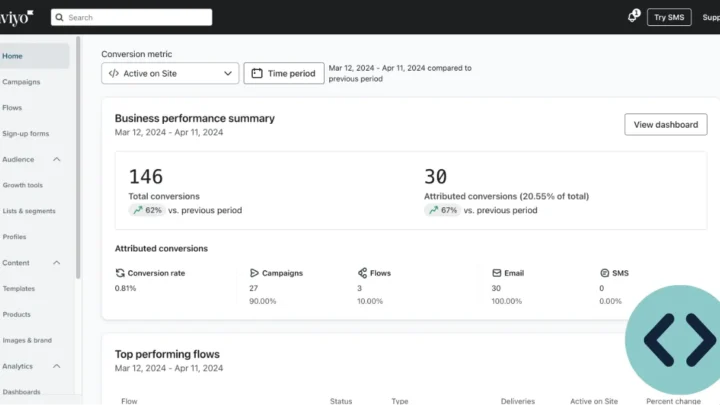
Klaviyo’s native Shopify sync captures events as they happen. Viewed product, started checkout, placed order, refunded order. Those events fire triggers immediately.
Mailchimp does connect to Shopify and WooCommerce, but the data depth is shallower. Custom behavioral triggers require more manual setup, and some events simply aren’t tracked by default.
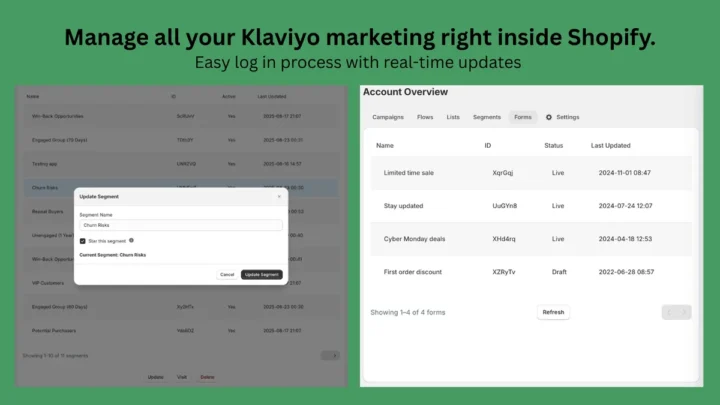
Per Shopify App Store listings, Klaviyo reports real-time catalog and order sync as a core feature. That’s the plumbing that makes everything else work.
Segmentation and Predictive Analytics
This is where Klaviyo pulls furthest ahead. Its segment builder supports AND/OR logic across historical and real-time conditions. You can build a segment like “viewed product X in last 7 days AND hasn’t purchased in 60 days AND has CLV above $200.”
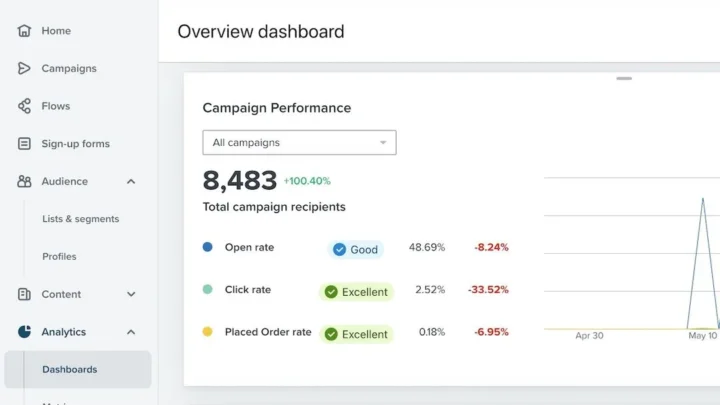
Predictive analytics add another layer. Klaviyo calculates customer lifetime value, churn risk, next order date, and expected date of next purchase automatically. Mailchimp’s Standard and Premium plans include some predictive features, but they’re narrower.
If you’ve ever wanted to send a winback email exactly when someone’s about to lapse, Klaviyo does that out of the box. Mailchimp makes you build it manually from a tag-based condition.
Flows, SMS, and Unified Customer Profiles
Klaviyo’s flow builder handles branching logic, conditional splits, and goal-based exits. Mailchimp’s Customer Journeys do some of this, but the branch depth and ecommerce templates are thinner.
SMS is the sharper divide. Klaviyo has native SMS in the US, Canada, UK, and Australia, sharing the same segments and profiles as email. Mailchimp’s SMS is limited by country and doesn’t integrate with the same depth.
Want to text the same segment you just emailed? Klaviyo treats that as one campaign. Mailchimp treats it as two disconnected systems, if it supports SMS in your region at all.
What Mailchimp Still Gets Right
Mailchimp isn’t the loser here. It’s just a different tool for a different job.
For non-ecommerce senders, Mailchimp is often the smarter pick. It’s simpler to learn, and its template editor remains one of the easiest in the industry. Bloggers, coaches, and service businesses ship campaigns faster on Mailchimp than on Klaviyo.
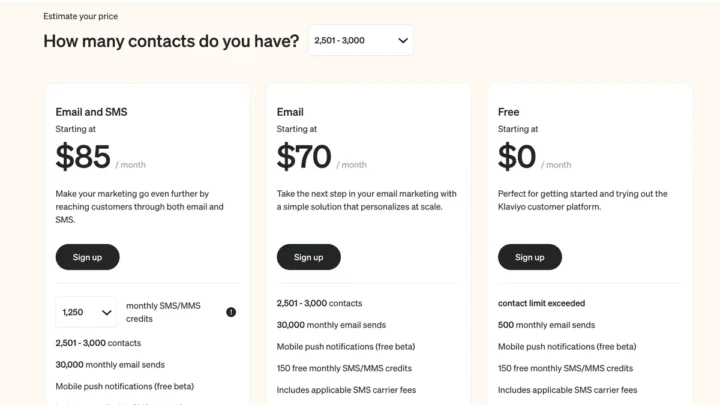
Pricing helps too. Mailchimp’s free tier covers 500 contacts and 1,000 sends per month. Klaviyo’s free tier caps at 250 contacts and 500 sends.
For tiny lists, Mailchimp gives you more room.
Mailchimp also bundles more general marketing features. Landing pages, basic CRM, social posting, and a built-in content studio. Klaviyo stays focused on email and SMS.
If you run a newsletter, sell services, or manage a list under a few thousand contacts without heavy automation, Mailchimp holds up fine. Switching would cost you time and money for gains you probably won’t use.
Head-to-Head: Features, Pricing, and Deliverability
Here’s where the two platforms sit side by side on the things that actually move revenue.
| Feature | Klaviyo | Mailchimp |
|---|---|---|
| Native SMS | Yes (US, CA, UK, AU) | Limited by region |
| Predictive analytics | CLV, churn risk, next order date | Partial, higher tiers only |
| Ecommerce flow templates | Deep, pre-built for Shopify etc. | Basic journeys |
| Free tier | 250 contacts / 500 sends | 500 contacts / 1,000 sends |
| Behavioral triggers | Real-time, event-based | Tag-based, more manual |
Pricing at Real List Sizes
Both platforms price by contact count, which means the real cost depends on your list size and how clean it is.
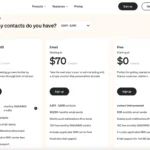
Klaviyo’s paid plans start around $20 per month at 500 contacts. Mailchimp’s Essentials tier starts around $13. The gap widens as you scale.
At 100,000 contacts, Klaviyo typically runs into the thousands per month, while Mailchimp’s Premium tier sits lower but with less ecommerce capability.
Contact-based billing is the trap on both platforms. Unsubscribed and unengaged profiles still count toward your bill. List hygiene matters more than the headline price.
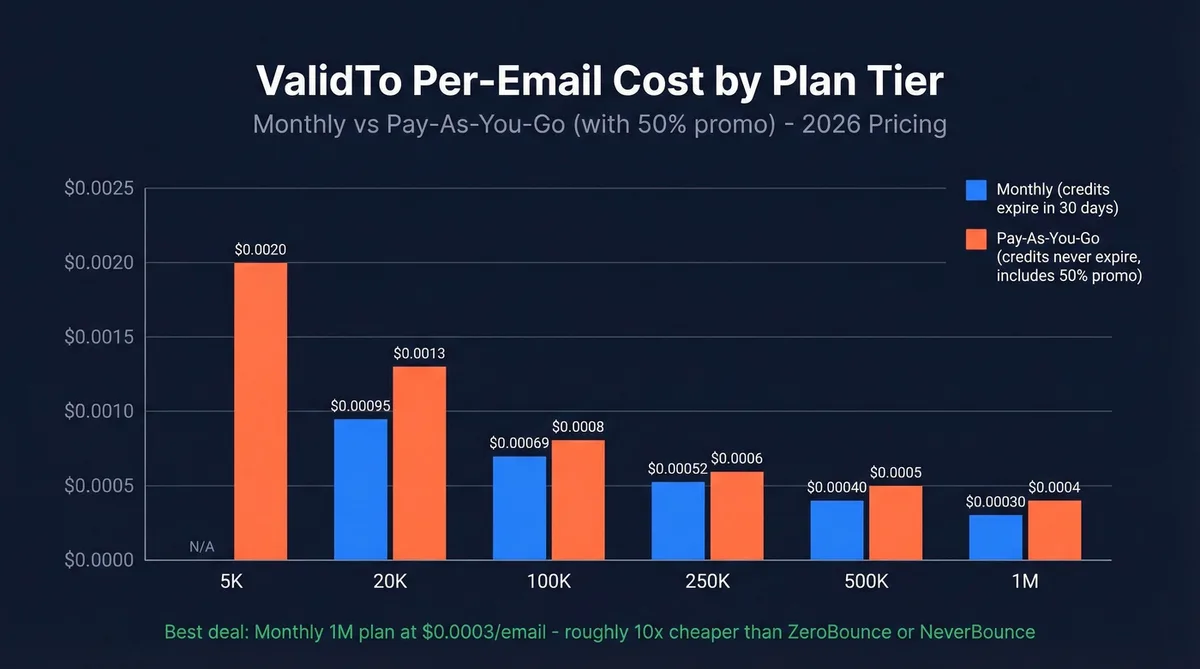
If you’re paying for 20,000 contacts but only 6,000 ever open, you’re burning money either way. Klaviyo’s engagement-based sending and segmentation tools make it easier to prune. Mailchimp’s Standard and Premium plans offer similar tools, but they’re less central to the product.
Deliverability and Compliance
Deliverability is infrastructure, not marketing. Both platforms require you to authenticate your sending domain with SPF, DKIM, and DMARC records.
Neither will do it for you. If you skip authentication, your emails land in spam regardless of which platform you pick.
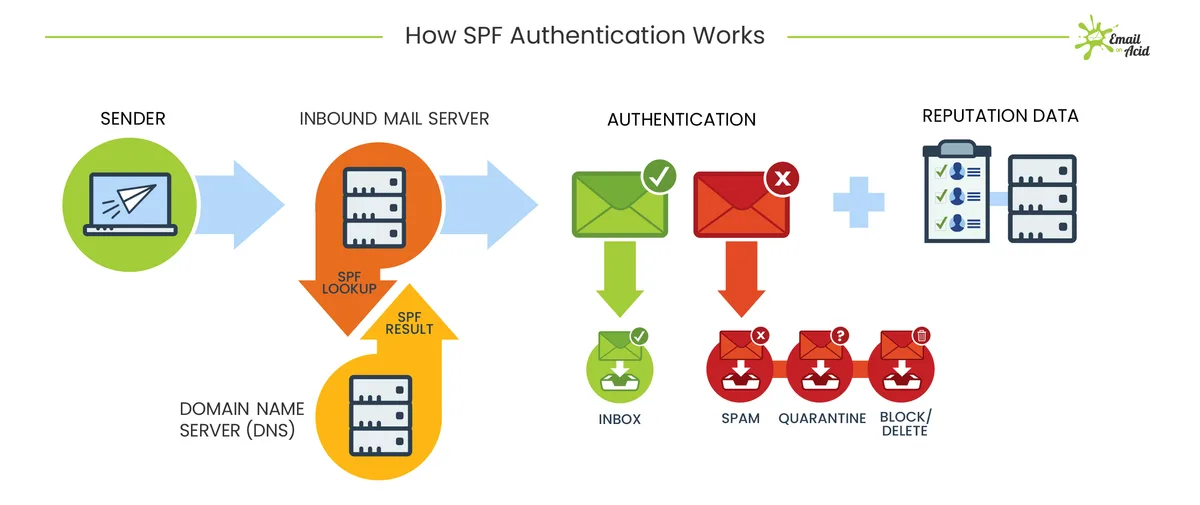
Google and Yahoo’s bulk sender rules, effective since February 2024, require authentication, one-click unsubscribe, and a spam complaint rate below 0.3% for senders hitting 5,000+ messages per day. Both platforms support these requirements. Klaviyo’s deliverability tooling and IP warmup guidance are notably more detailed for high-volume ecommerce senders.
On compliance, both handle CAN-SPAM and GDPR basics. For SMS, TCPA consent rules in the US apply regardless of platform. Klaviyo’s SMS onboarding walks you through opt-in language and sender ID setup.
Mailchimp’s SMS, where available, is lighter.
If you’re sending high volumes, check Google’s official bulk sender guidelines before you switch anything. Authentication setup carries over, but reputation building doesn’t.
Who Klaviyo Is Actually Better For (And Who It Isn’t)
The honest split comes down to whether email revenue depends on store behavior. If it does, Klaviyo wins. If it doesn’t, Mailchimp is often the smarter, cheaper call.
Klaviyo Wins If You’re…
Klaviyo is the right pick when your email revenue leans on flows and behavior. Stores past roughly 1,000 contacts usually feel this first.
- DTC ecommerce brands. Physical products, checkout flows, repeat purchases. Behavioral triggers do the heavy lifting.
- Shopify-led stores. Native real-time sync means product views, carts, and orders feed flows without custom work.
- Brands scaling past ~1,000 contacts. Predictive segmentation starts paying for itself here.
- SMS-first senders. Native SMS sharing email segments is a real advantage for launches, drops, and restocks.
- Agencies managing ecommerce clients. The reporting and attribution depth make client work easier to prove.
If two or more of those apply to you, the migration math usually tips toward Klaviyo. The revenue lift from better triggers and segmentation tends to outrun the higher bill.
Mailchimp Wins If You’re…
Mailchimp is the better fit when ecommerce behavior isn’t the point. Simpler jobs, simpler tool.
- Newsletters and blogs. You’re sending content, not cart recovery. Mailchimp’s editor is faster to work in.
- Service businesses and coaches. Basic automation and a clean template library cover most needs.
- Small static lists under a few thousand contacts. The free tier and lower paid entry point go further.
- Anyone not selling products online. Behavioral ecommerce triggers won’t earn their keep.
If that sounds like you, switching to Klaviyo means paying more for features you’d never use. Stay put. Revisit the question when you launch a store or your list crosses 5,000 engaged contacts.
Mistakes to Avoid Before You Switch
Migrating platforms is where most switchovers go wrong. The tools are fine. The setup usually isn’t.
- Migrating without warming your sending domain. Your reputation doesn’t carry over. Start with your most engaged segment and ramp volume slowly over 2 to 4 weeks.
- Rebuilding flows badly. Triggers, branches, and goals often don’t port cleanly. Rebuild each flow from scratch rather than copying the structure blind.
- Skipping list hygiene. Dead contacts inflate your bill on both platforms. Run a re-engagement campaign, then suppress anyone who hasn’t engaged in 6 to 12 months.
- Assuming templates and forms port over. They don’t. Budget a full rebuild for signup forms, popups, and email templates.
- Ignoring SMS compliance. TCPA consent rules apply in the US. Set up opt-in language and sender ID before your first send.
- Cutting over mid-campaign. Finish active campaigns and A/B tests before migrating. Split attention produces bad data.
Plan for two to four weeks from first export to full cutover. Anyone promising a one-day swap is selling you a broken domain reputation.
Frequently Asked Questions
Is Klaviyo really worth the higher price?
For ecommerce stores running behavioral flows, usually yes. Klaviyo’s flow revenue and segmentation often outrun the cost gap. For newsletters and service businesses, no.
Mailchimp is cheaper and covers the same ground.
Can I use Klaviyo without Shopify?
Yes. Klaviyo integrates with WooCommerce, BigCommerce, Magento, and others through native connectors or API. The Shopify sync is the deepest, but you’re not locked to it.
Does Mailchimp have SMS like Klaviyo?
Partially. Mailchimp offers SMS in limited regions with a narrower feature set. Klaviyo’s SMS is native in the US, Canada, UK, and Australia and shares segments with email.
How long does migration take?
Plan two to four weeks. Exporting contacts is fast. Rebuilding flows, templates, forms, and warming your domain is the real work.
Rushing it risks deliverability dips.
Will switching hurt my deliverability?
Only if you rush it. Authentication records (SPF, DKIM, DMARC) carry over. Sending reputation doesn’t.
Warm up gradually from your most engaged segment.
Should I run both platforms at once?
Only briefly during migration. Running two ESPs long-term splits your data and weakens attribution. Pick a cutover date and move cleanly.
Final Verdict: Which One Should You Actually Pick?
Klaviyo is better than Mailchimp when your email revenue depends on store behavior. If you sell products online and rely on cart recovery, winback, and predictive segmentation, Klaviyo earns its price.
Mailchimp is better when email is a communication channel, not a revenue engine. Newsletters, services, and small static lists do just fine, and switching would cost you money for gains you won’t use.
Here’s the one line that settles it most of the time. If losing an abandoned cart email actually costs you money, pick Klaviyo. If it doesn’t, stay on Mailchimp.
Quick checklist before you decide:
- Selling physical products with a checkout? Lean Klaviyo.
- Want email and SMS in one system? Klaviyo.
- Just sending content to readers? Stay on Mailchimp.
- Under 1,000 contacts and no ecommerce? Stay on Mailchimp.
- Scaling fast and leaning on flows? Klaviyo, and budget two to four weeks for migration.
Whichever you pick, get your authentication records right before you send a single campaign. That one step matters more than the platform logo at the top of your dashboard.

Similar Posts